Summer Enrichment Day Camps
 Although we love summers for vacations and days at the beach, it's also a great time to catch up, keep up, and leap ahead academically. EdBoost enrichment day camps are intense, fun, and productive. Students learn new skills, practice old skills, and do a lot of academic work.
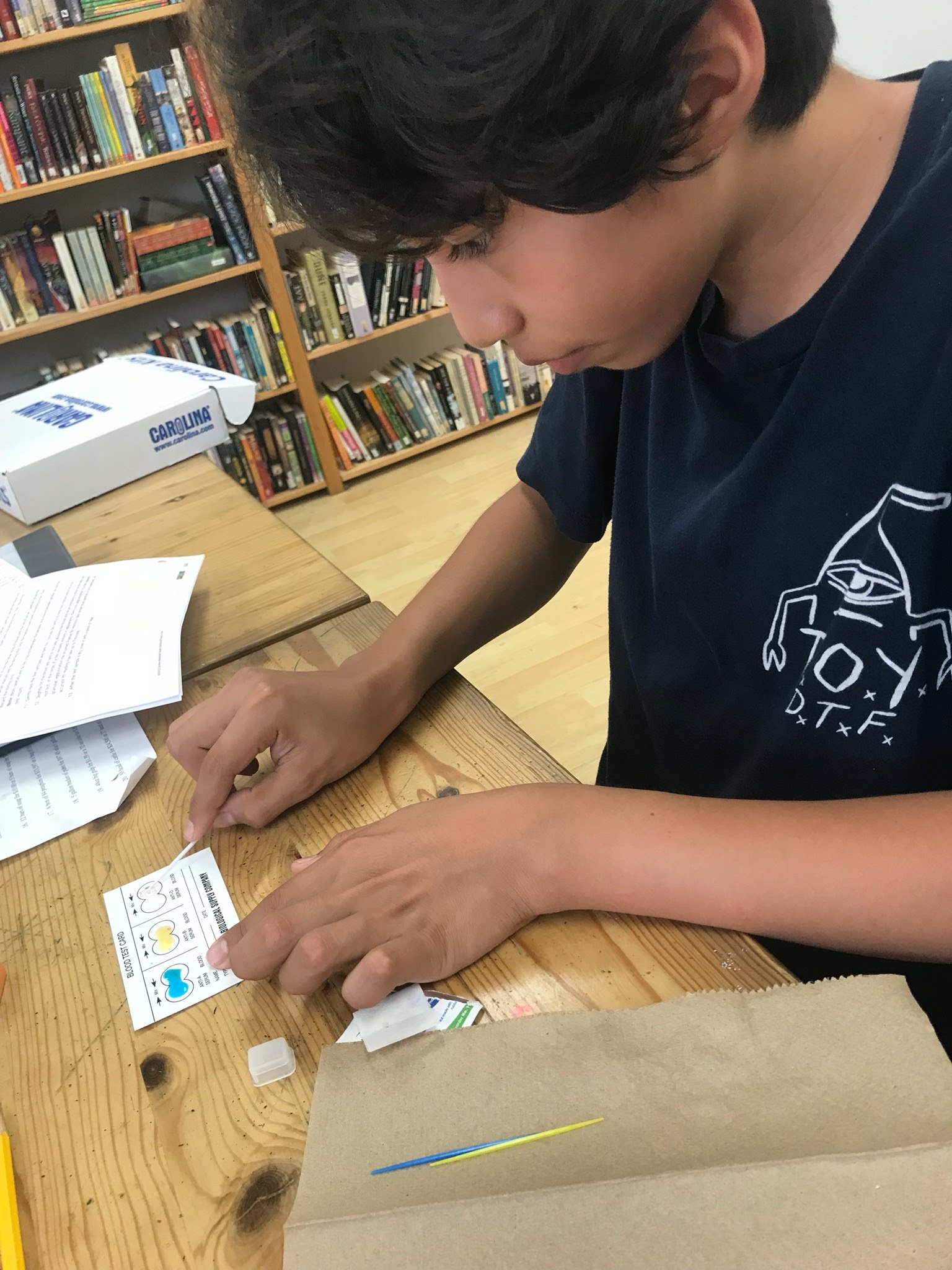
At EdBoost we believe that learning should be fun, but also that a lot of learning -- especially math -- must be explicit. So, we teach and practice academic materials explicitly (rather than trying to have students "absorb" math through science or other curriculum). Although there are active and hands-on parts of all of our camps, all of our camps have a strong academic slant and prioritize learning. In past years, students have finished their camps feeling like they have worked hard and learned a lot -- but also like they've had a good time doing it (and have enjoyed making friends from other schools, too!). And we love that summer allows us to give students the hands-on experiences that they don't always get in school (last year students in grades K-8 experienced all kinds of dissection adventures, and even the squeemish ones ended up loving it!).
All camps run from 9am-3pm, Monday-Friday (except for the CollegeBoost! Workshop which is just two crazy days of essay writing!).
We offer after-care (from 3pm-5:30 pm) for an additional \$100/week (or \$25/day). You can now sign up for aftercare online when you enroll. If you are signing up by day, just add the number of days you need to your cart. You can specify particular days as we get closer to summer.
There are scholarships available for all camps and workshops (submit a scholarship form for your family's rate).
We require full payment at the time of enrollment. Enrollment is on-going, but we ask you to sign up by June 1st so that we have time to cancel under-enrolled camps. Camps that are full or have been cancelled will be removed from the list below. If you can click a link and enroll in a camp, that camp is still accepting students. Camps must have at least 6 students enrolled or they will be canceled. Any enrolled students will receive a full refund for any camps cancelled due to low-enrollment. Camps that are cancelled due to a COVID related shut-down will also be fully refunded. Except in cases of EdBoost cancellations, all camps are non-refundable.
The maximum enrollment in each camp is 10-15 students (cap varies by camp).
Camps accept students within specified age ranges. Some camps also have pre-requisites. If your child is outside the age range but meets pre-requisites, please send us a note (edboost@edboost.org). We are happy to admit students to camps that are the right fit, even if the grade level is not a perfect fit.
See list of 2023 Summer Enrichment Day Camps below
 For many first, second, and third graders, the hardest part of school is memorizing math facts. But, adding and subtracting (even with regrouping!!) is so much easier once students can leave their fingers behind and just use their addition and subtraction facts. And times tables make everything so much easier! So, how can you help kids learn these important facts?
 We all know that computing is the future. And, we know that our kids love games and screens. So, how do we teach our kids to be the folks behind those wonderful games and screens?
 Algebra is the foundation of most high school math, a core part of the ISEE, PSAT, and SAT, and a critical part of the high school exit exam. In other words: students need to master algebra.
 Most elementary school students master computation with whole numbers -- but many struggle with fractions and decimals. The processes are similar; the basic skills are the same. And yet, almost every middle school student we see at EdBoost needs to go back to 4th and 5th grade math material and relearn how to compute with fractions and decimals.
 Writing is an essential life skill -- and in order to write well, we need instruction, practice, and feedback.
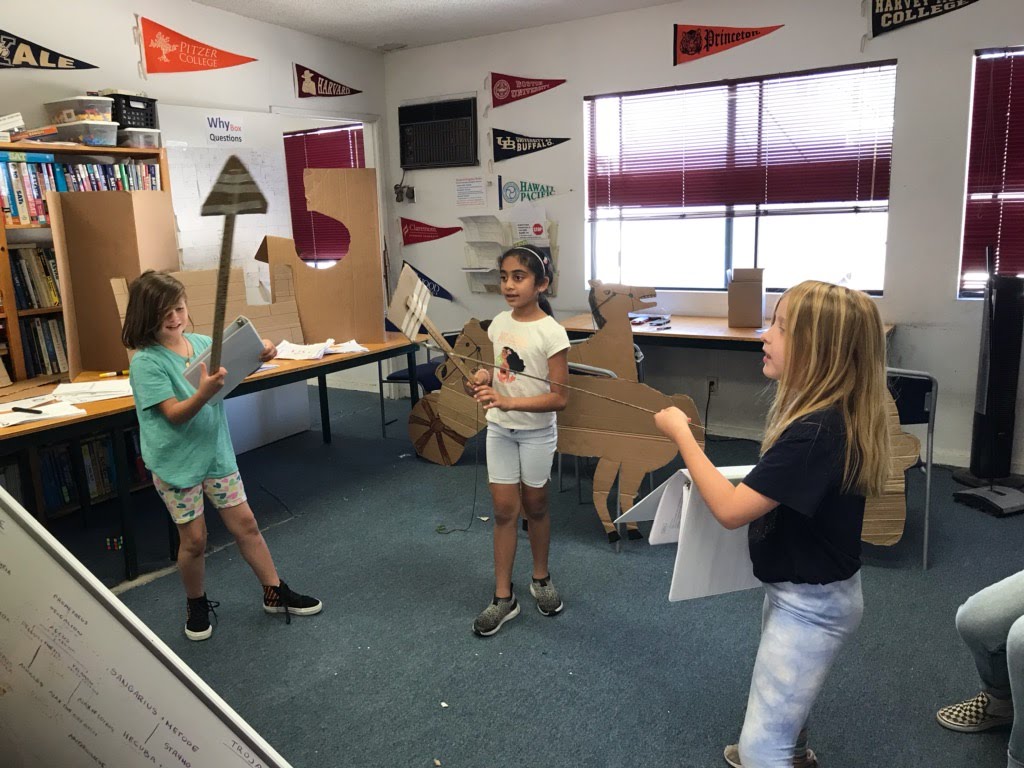 The past three years' Mythology and History classes evolved into a deep study of and fantastic performances of The Illiad, The Odyssey, and The Aeneid. The students built and sprang from their own Trojan horse and acted out the entirety of these epics, learning myths, history, and language in the process.